

In the industrial materials market, waxes play a crucial role in applications ranging from packaging to adhesives, coatings, and cosmetics.
Among the most commonly used types are paraffin wax and microcrystalline wax — both petroleum-based but with different molecular structures and performance characteristics.
Understanding how they differ helps manufacturers and traders make the right decisions when sourcing or formulating industrial wax blends.
At Waxian International, we provide dependable access to high-quality waxes and oils through reliable logistics and trusted global partnerships.
What Is Paraffin Wax?
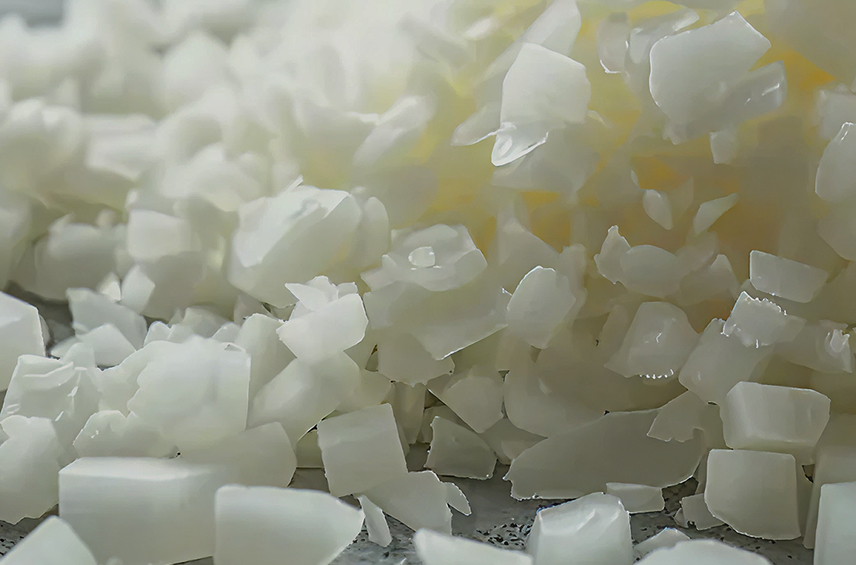
Paraffin wax is a white, odorless solid derived from petroleum refining.
It consists mostly of straight-chain hydrocarbons, which gives it a brittle and crystalline structure.
Key properties:
- Melting point: 46–68 °C (115–154 °F)
- Oil content: typically 0.5–1.5 %
- Adhesion: low
- Texture: hard and glossy
Its clean appearance and stability make it suitable for candles, packaging, and cosmetic formulations, where clarity and smooth surface finishing are important.
What Is Microcrystalline Wax?
Microcrystalline wax comes from the heavier fractions of petroleum refining.
It contains a higher proportion of branched and cyclic hydrocarbons, resulting in a denser, more flexible, and tackier texture than paraffin.
Key properties:
- Melting point: 60–90 °C (140–194 °F)
- Oil content: up to 5 %, depending on grade
- Adhesion: high
- Texture: tough and elastic
Because of its fine crystal structure and higher viscosity, it performs well in adhesives, coatings, rubber modification, and corrosion protection.
Comparison Table: Paraffin vs Microcrystalline Wax
| Property | Paraffin Wax | Microcrystalline Wax |
| Hydrocarbon Structure | Straight chains | Branched / cyclic |
| Appearance | Clear, brittle | Opaque, flexible |
| Melting Point | 46–68 °C | 60–90 °C |
| Oil Content | 0.5–1.5 % | Up to 5 % |
| Adhesion | Low | High |
| Flexibility | Brittle | Pliable |
| Common Applications | Candles, cosmetics, coatings | Adhesives, rubber, protective films |
Industrial Performance and Use
Choosing between paraffin wax and microcrystalline wax depends on process requirements and desired end-product properties:
- Paraffin wax offers a clean finish and predictable melting behavior — ideal for large-scale, cost-sensitive production.
- Microcrystalline wax provides superior adhesion, elasticity, and barrier strength, supporting applications that require durability and sealing performance.
Many industrial users combine both types or modify them through custom blends, achieving specific hardness, gloss, and flexibility levels for their production goals.
Reliable Supply and Technical Support
With over two decades of global trading experience, Waxian International delivers dependable products, strong logistics, and consistent service across the USA, Europe, and Asia.
We maintain long-term relationships with refineries, trading companies, and manufacturers — ensuring that clients receive the exact grades and quantities they need, delivered efficiently and safely.
Our experts assist partners in selecting optimal industrial wax solutions and coordinating bulk logistics through ISO tanks, parcel tankers, and drums. Every shipment reflects our commitment to quality, reliability, and long-term collaboration.
FAQ — Common Questions About Industrial Waxes
The two types differ mainly in structure and performance. Paraffin wax has straight-chain molecules, making it harder and more brittle. Microcrystalline wax is more flexible and adhesive due to branched hydrocarbons.
Yes. Many manufacturers use custom wax blends to balance hardness, gloss, and tackiness. These formulations can be adjusted for cosmetics, coatings, adhesives, or rubber compounds.
Waxian International connects clients with high-quality waxes, oils, and related materials, backed by efficient global logistics and strategic partnerships with leading petrochemical suppliers.
Through strict quality control, documentation, and proven sourcing standards, Waxian International has maintained zero product quality claims and 100 % client retention over more than 20 years.
Final Thoughts
Both paraffin and microcrystalline waxes serve essential roles in modern industry. Understanding their properties helps businesses improve process stability, appearance, and performance of finished goods.
For dependable industrial wax sourcing, logistics, and tailored support, contact Waxian International — your trusted global partner in waxes, oils, and custom solutions.